← all workBrand & Editorial
Anfal
The record kept legible — no slogan, no catharsis.
- Year
- What was made
- Poster series, Memorial, Exhibition
The work
Between February and September 1988, the Iraqi Ba'athist state ran a series of military operations across Kurdistan known as the Anfal campaign. Tens of thousands of civilians — by most credible estimates between 50,000 and 100,000 — were killed, disappeared, or displaced. Whole villages were razed; mass graves are still being identified.
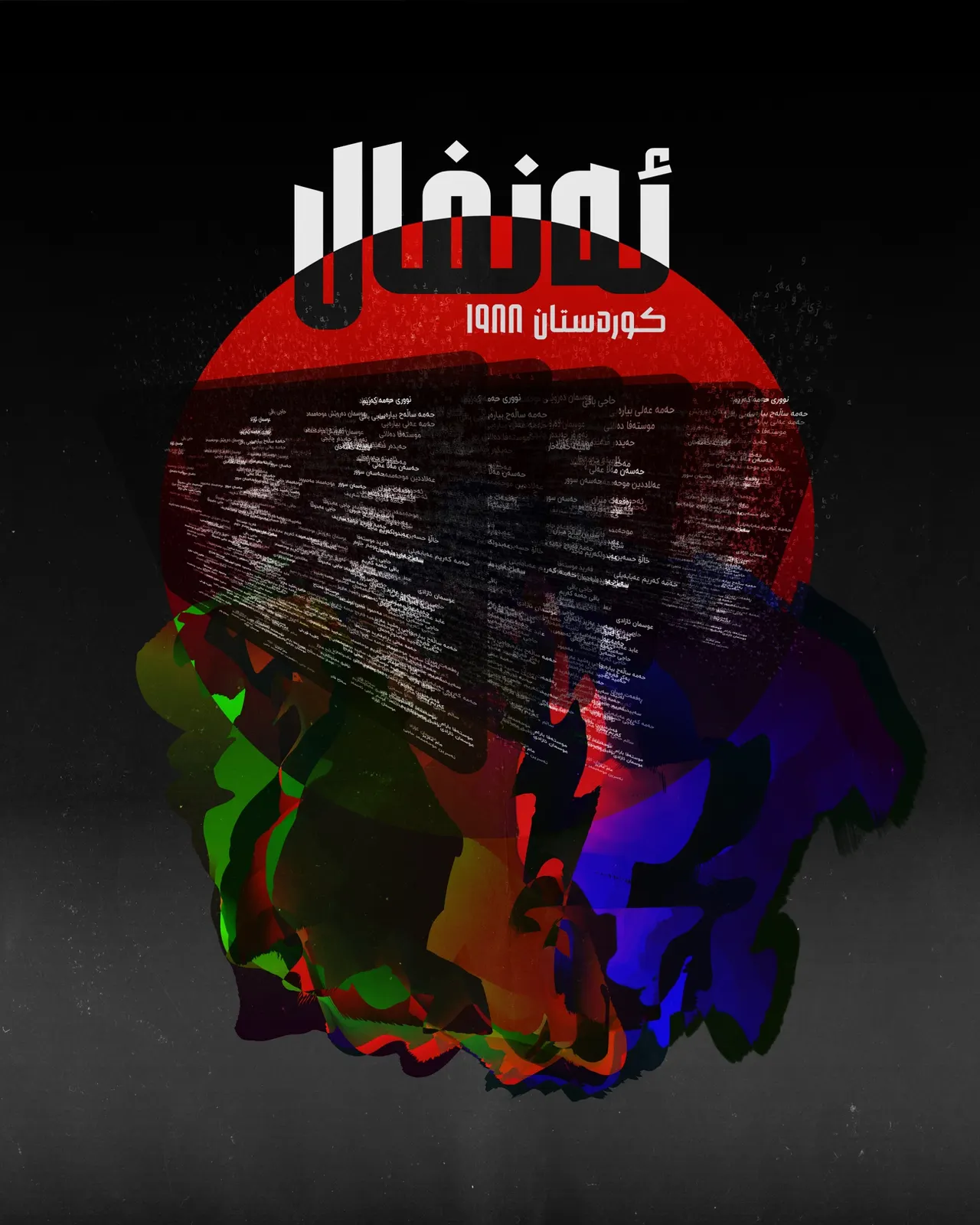
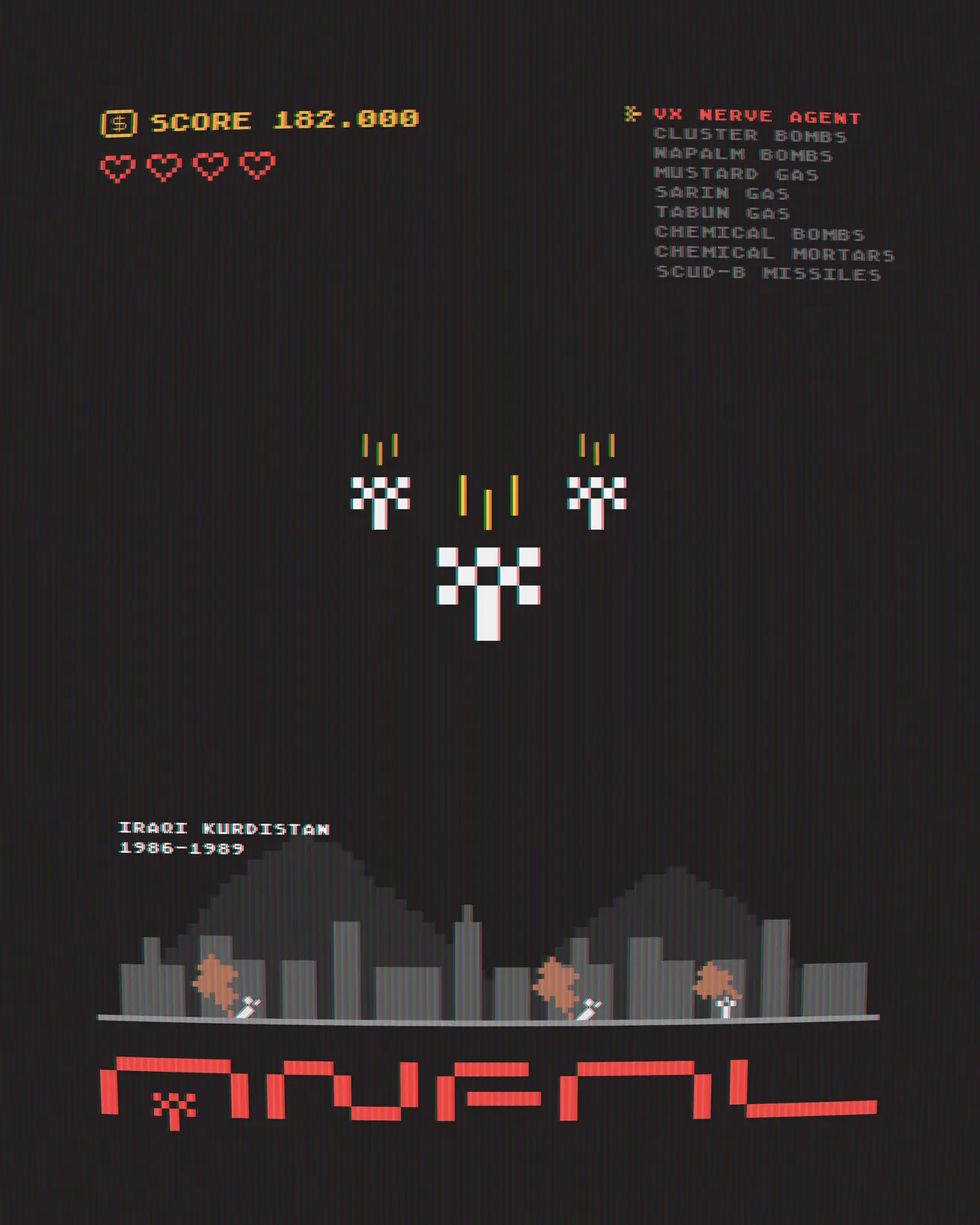
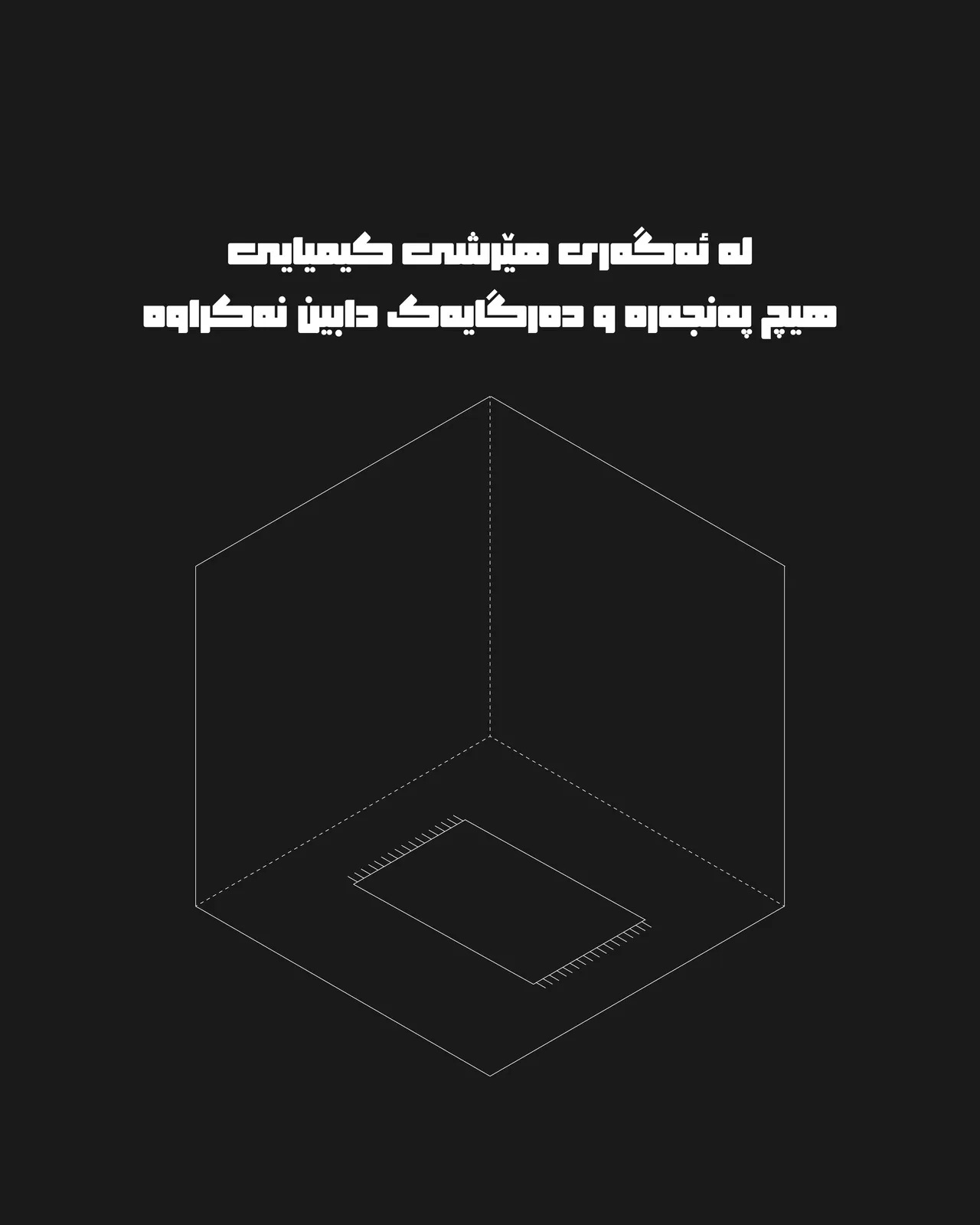
Three posters, made for the Nishtman Strategy Institute's national graphic design exhibition. The lead piece layers the names of the dead across a red sun, set with restraint — no slogan, no decorative grief, just a record kept legible. The other two were built with Qanea Mahmoodi and Mohammad Rahimpour: a video-game score screen that turns the weapons used — VX nerve agent, mustard and sarin gas, Scud-B missiles — into a scoreboard, and an isometric room with no door or window left to close against the gas.
Next project
Raaznet
A brand voice with one rule: it never gets a reader questioned.